The Concept of Environmental Law



Проверьте себя
Право
Короткие вопросы помогут вспомнить главное в документе.
Загрузка вопросов…

Navigation
General Provisions
This section explains the concept of environmental law, its origin and place within the system of legal knowledge. The main approaches to defining environmental law as a branch of law, science, and academic discipline are considered, as well as various scientific positions on its content and structure.
Special attention is given to the relationship between narrow and broad approaches to understanding environmental law, its role in regulating relations between society and the environment, as well as its importance in ensuring rational use of natural resources and ecological safety.
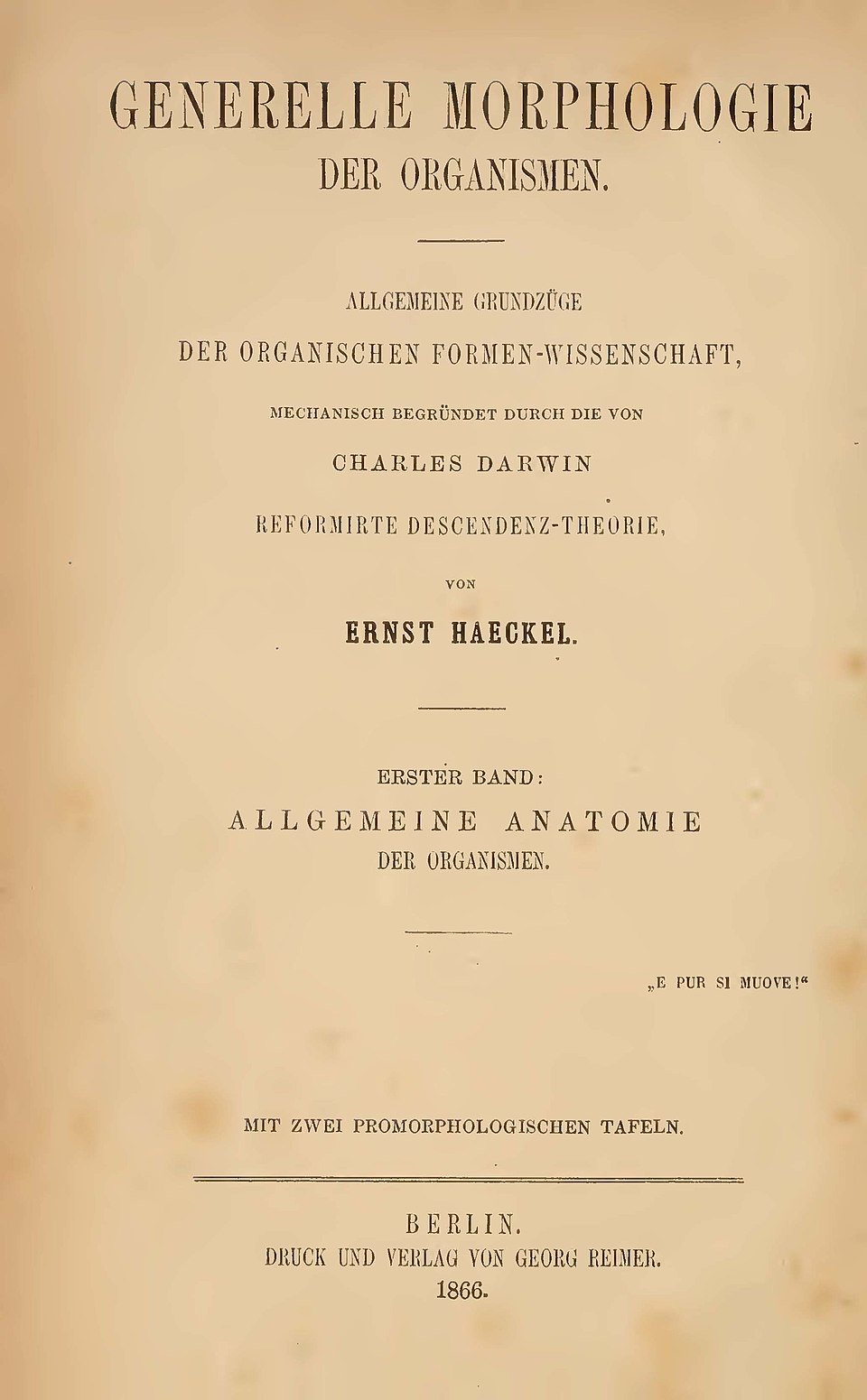
 The concept of "ecology" was introduced into scientific use by the German scientist and biologist Ernst Haeckel, who published a book titled "General Morphology of Organisms" in 1866. In this book, ecology was considered as a general science dealing with the relationships between organisms and the surrounding external world1. The term "ecology" comes from two Greek words: "oikos" (home, dwelling) and "logos" (teaching, knowledge). Thus, the concept of "ecology" can be literally translated as "the science of habitat."
Definition of Environmental Law in Literature
Environmental law is usually considered from three perspectives: 1) environmental law as a branch of law2; 2) environmental law as a science; and 3) environmental law as an academic discipline. In ecological legal science, several approaches have been proposed to define environmental law as a branch of law.
According to S.A. Bogolyubov, environmental law is a set of interrelated legal norms regulating social relations in the area of interaction between society and the environment3. Environmental law should include nature protection law, natural resources law, and ecologized norms of other legal fields. Such a division and system of environmental law allow forming an opinion about the state of the normative-legal basis for environmental protection, providing a complete and comprehensive understanding of the progress and degree of accomplishment of tasks addressed by it, identifying missing links in it, eliminating unnecessary projects, in light of the above, normative legal acts that do not concentrate possibilities but dilute the role of law itself4.
While O.I. Krassov considers environmental law to be an independent branch of Russian law, consisting of a set of legal norms regulating a wide range of public ecological relations related to the implementation of measures for protecting the natural environment in the field of nature use from negative impacts (chemical, physical, biological) and conservation measures for nature5.
The approaches to understanding environmental law presented in scientific literature are referred to as broad and narrow. According to A.K. Golichenkov, environmental law (in the narrow sense – nature conservation law) is a system of legal norms and legal institutions forming a comprehensive branch of law, the subject of which are social relations only concerning the protection of the natural environment – "nature conservation" relations; (in the broad sense) social relations not only concerning the protection of the natural environment, but also social relations concerning the use and protection of natural resources and relations concerning ensuring ecological safety for humans and other objects (society, state)6.
In this work, we will adhere to a broad approach to understanding environmental law, as it allows taking into account the complex forms of interaction between humans, society and the environment, and demonstrates the inseparable unity of processes related to the use of natural resources and their protection7.
According to O.S. Kolbasov, the super-industry of "environmental law" holds a huge future, which will split all legal requirements and norms into property-related and environmental protection-related ones, with the latter taking a leading role due to overpopulation of Earth, exhaustion of natural resources, and forced transfer of all natural resources into common use, as well as the priority of general nature conservation and natural resources over their consumption and distribution among owners8.
Ernst Haeckel. Generalle Morphologie der Organismen. Zweiter band: allgemeine entwickelungsgeschichte der organismen. / Verlag von Georg Reimer. Berlin. 1866. P. 286. ↩
"A legal field is a set of legal norms that form an independent, separate part of the legal system, regulating a qualitatively homogeneous sphere of social relations by its own special method." (Lazarev V.V., Lipen' S.V. Theory of the State and Law: textbook for higher educational institutions. Moscow, 1998. P. 220). ↩
Bogolyubov S.A. Environmental Law: textbook. Moscow, 2004. ↩
Bogolyubov S.A. On the possibilities of environmental law // Journal of Russian Law. 2000. ↩
Krassov O.I. Environmental Law: textbook. Moscow: Norma, 2008. Pp. 41–42. ↩
Golichenkov A.K. Environmental Law of Russia: a dictionary of legal terms. Moscow, 2012. P. 438. ↩
Kichigin N.V., Ponomarev M.V., Khludeyeva N.I. Environmental Law: lecture notes. Moscow, 2009. P. 14. ↩
Kolbasov O. S. Testament to ecologists // Ecological law. 2001. ↩