Legal Regulation of Economic Mechanisms for Environmental Protection and Rational Use of Natural Resources



Проверьте себя
Право
Короткие вопросы помогут вспомнить главное в документе.
Загрузка вопросов…
Navigation
- General Provisions
- Basic Economic Mechanisms of Environmental Protection
- Environmental Payments
- Stimulating Rational Use of Natural Resources
- Legal Regulation of Economic Mechanisms for Environmental Protection
General Provisions
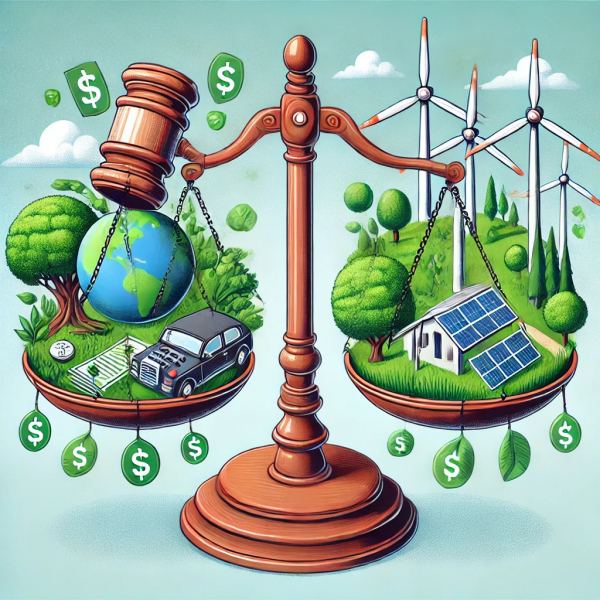
The legal regulation of economic mechanisms for environmental protection and rational use of natural resources is aimed at forming a system of incentives for environmentally responsible behavior by economic entities. It includes a set of legal norms and economic instruments that allow minimizing the negative impact on nature and ensuring the rational use of natural resources.
Among the main economic mechanisms of environmental protection are ecological payments and taxes, licensing and quota systems for resource use, an ecological insurance system, incentives for implementing the best available technologies, and compensation for environmental damage. These measures enable the state to influence the behavior of enterprises and other entities engaged in economic activities, reducing the risks of environmental violations.
Environmental payments play a key role in economic regulation. They include fees for negative environmental impact, charges for the use of natural resources, and environmental fines for violations of legislation. These payments perform both fiscal and incentive functions, encouraging rational use of natural resources and compensation for damage to ecosystems.
Government measures to promote rational use of natural resources include tax benefits, subsidies, grants, and green financing for the implementation of environmentally friendly technologies and innovations. Such measures aim to reduce environmental burden and support sustainable economic development taking into account nature conservation interests.
The legal regulation of economic mechanisms for environmental protection is carried out on the basis of federal legislation: the Federal Law "On Environmental Protection", the Tax Code of the Russian Federation, the Water, Forest and Land Codes, as well as the law "On Natural Resources". Improvement of these legal norms contributes to efficient use of natural resources, implementation of environmentally safe technologies and enhancement of environmental safety in the Russian Federation.
Economic mechanisms for environmental protection and rational use of natural resources represent a system of legal and economic instruments aimed at stimulating ecologically responsible behavior by economic entities. State regulation in this area is carried out with the aim of minimizing negative impact on the environment and rational use of natural resources.
Basic Economic Mechanisms of Environmental Protection
To economic mechanisms of environmental protection belong:
- Environmental payments and taxes – monetary contributions for the use of natural resources and compensation for negative impact on the environment.
- Pollution discharge fees – charged from enterprises for emissions of harmful substances into the atmosphere, discharges of pollutants into water bodies and waste disposal.
- Licensing and quota systems – setting standards for the use of natural resources, issuing licenses for environmental use.
- Environmental insurance system – a mechanism allowing compensation for damage caused to the environment as a result of accidents and ecological disasters.
- Stimulation of environmentally clean technologies – granting benefits and subsidies to enterprises using best available technologies (BAT).
- Compensation for environmental damage – obligation of enterprises to eliminate the consequences of the damage caused to the environment by them.
Environmental Payments
Environmental payments represent financial obligations of economic entities for the use of natural resources and pollution of the environment. The main types of environmental payments include:
- Payment for negative impact on the environment – charged for emissions of pollutants, discharges into water bodies, and waste disposal.
- Payment for the use of natural resources – includes payments for the extraction of minerals, water abstraction, and the use of forest and land resources.
- Environmental fines – applied for violations of environmental legislation.
Stimulating Rational Use of Natural Resources
The state applies various mechanisms to encourage the rational use of natural resources, including:
- tax benefits for enterprises implementing environmentally friendly technologies;
- state subsidies for environmental protection activities;
- grants for the development and implementation of ecological innovations;
- green financing and loans for ecologically sustainable projects.
Legal Regulation of Economic Mechanisms for Environmental Protection
The main regulatory acts governing economic mechanisms for environmental protection and natural resource use:
- Federal Law "On Environmental Protection" (No. 7-FZ) – establishes the principles of economic regulation in the use of natural resources and environmental protection.
- Russian Tax Code – contains provisions on taxation in the field of natural resource use.
- Federal Law "On Subsoil" – regulates the economic aspects of the extraction of minerals.
- Russian Water Code – defines the procedure for charging fees for water use.
- Russian Forestry Code – contains norms on rent payments and other types of fees for the use of forest resources.
- Russian Land Code – regulates the fee for the use of land plots.
Economic mechanisms for environmental protection contribute to efficient use of natural resources, stimulate reduction of environmental pollution and implementation of environmentally safe technologies. Improvement of legal regulation in this area is an important condition for ensuring sustainable development and ecological safety of the Russian Federation.