Legal regulation of the use and protection of land



Проверьте себя
Право
Короткие вопросы помогут вспомнить главное в документе.
Загрузка вопросов…

Navigation
General Provisions
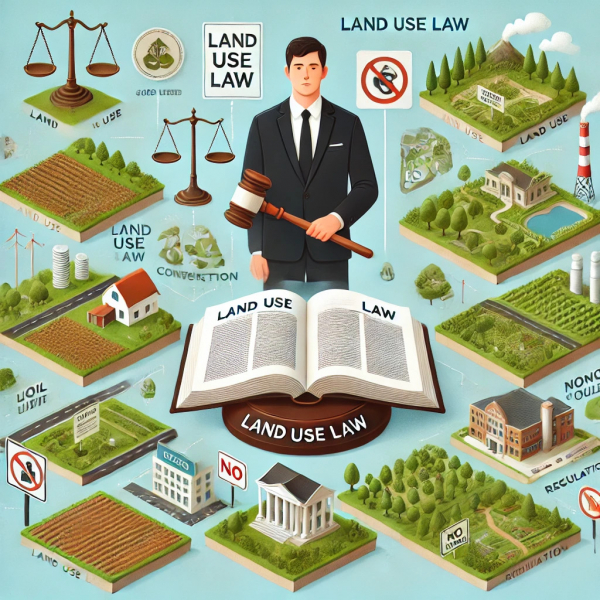
The legal regulation of the use and protection of land is aimed at ensuring the rational utilization of land resources and protecting their natural properties. Legislation establishes obligations for owners, land users, and lessees to preserve fertility, prevent degradation, and protect land from various negative impacts of economic activities.
Land protection is carried out through public-law methods, as the condition of the land affects the well-being of society and future generations. Land is considered the basis of the natural system, one of the most important natural resources, and a means of production in agriculture and forestry, which requires a comprehensive approach to its use and protection.
The condition of land in Russia demonstrates the spread of erosion, deflation, wetland formation, salinization and desertification, making it necessary to constantly monitor and take measures to restore degraded territories. For these purposes, targeted programs are being developed, land reclamation is carried out, and activities aimed at preserving soil fertility are conducted.
The legislation defines an open list of rights of landowners, including the use of minerals, construction, implementation of land improvement works and other actions in accordance with the intended purpose of the plot. At the same time, the rights of persons who are not owners are regulated through contracts or public servitudes.
State land policy is aimed at reconciling public and private interests, regulating the turnover of land resources and monitoring compliance with requirements for the use and protection of land. Comprehensive legal regulation ensures a balance between economic activity and the conservation of natural resources.
As E.L. Minina notes, land protection is mainly carried out through public-law methods, since the results of land protection activities are of interest to society as a whole; this affects the health and well-being not only of current but also future generations1. Whereas, according to E.A. Galinskaya, land protection constitutes one of the main tasks of environmental protection. Land requires protection not only as an irreplaceable natural object but also as the basis for the existence of the entire natural system. Therefore, requirements in the area of land protection are closely linked to general requirements regarding the protection and use of other natural objects2.
Analysis of data from state land monitoring and other environmental observation systems shows that the trend of worsening land conditions continues in practically all subjects of the Russian Federation. Among the dangerous negative processes intensively developing on the territory of the Russian Federation are erosion, deflation, peatification, salinization, desertification, waterlogging, overgrowth of agricultural lands with shrubs and small forest vegetation, and other processes leading to loss of fertility of agricultural lands and their removal from economic circulation.
Erosion affects 17.8% of the area of agricultural lands, wind erosion affects 8.4%, waterlogged and swampy areas account for 12.3%, saline and solonchak soils cover 20.1% of agricultural lands. The most dangerous in terms of erosion are the territories of the Volga (50.0%), Southern (16.0%) and Central (13.0%) federal districts, in terms of deflation risk – the Siberian (43.0%) and Southern (30.0%) federal districts. The process of peat formation is most developed on the territory of the Central (31.0%) and Siberian (23.0%) federal districts, salinization – in the Southern (approximately 50.0%) and Siberian (about 30.0%) federal districts.
Land desertification is one of the most intense and widespread processes on arid territories of the south of the country; land desertification affects to some extent 27 subjects of the Russian Federation on an area exceeding 100 million hectares.3
Among the principles of land legislation is the principle of taking into account the significance of land as the basis of human life and activities, according to which regulation of relations concerning the use and protection of land is carried out based on the understanding of land as a natural object protected as an essential component of nature, a natural resource used as a means of production in agriculture and forestry, and the foundation for conducting economic and other activities within the territory of the Russian Federation, and at the same time as immovable property, an object of ownership and other rights to land.
The legislation also provides for the priority of protecting land as one of the most important components of the environment and a means of production in agriculture and forestry over its use as immovable property, according to which ownership, use, and disposal of land are carried out freely by landowners, provided that this does not cause harm to the environment (Article 1 of the Land Code of the Russian Federation).
According to E.A. Galinskaya, from a legal perspective, the protection of land can be viewed as regulated by legal norms social relations in the area of ensuring the preservation of natural properties of land4. It should also be noted that, along with lands, soils are also objects of environmental protection from pollution, depletion, degradation, damage, destruction and other negative impacts of economic and other activities (Article 4 of the Federal Law "On Environmental Protection").
A bill titled "On Soil Protection" was submitted to the State Duma of the Federal Assembly of the Russian Federation 5, which has not been adopted to date. The Red Book of Soils of the Russian Federation and the Red Books of Soils of the subjects of the Russian Federation are being compiled. Target programs aimed at preserving and restoring soil fertility are being adopted (for example, Government Decree No. 99 dated February 20, 2006 "On the Federal Target Program 'Preservation and Restoration of Soil Fertility of Agricultural Land and Agro-Landscapes as a National Treasure of Russia for the Period 2006-2010 and Until 2013"6).
The objectives of land protection are: 1) prevention of land degradation, pollution, contamination, disturbance, and other negative (harmful) impacts of economic activities; 2) ensuring the improvement and restoration of lands that have undergone degradation, pollution, contamination, disturbance, or other negative (harmful) impacts of economic activities (paragraph 2 of Article 12 of the Land Code of the Russian Federation).
In order to protect land, owners of land plots, land users, landholders, and lessees of land plots are obliged to conduct measures including: 1) preservation of soils and their fertility; 2) protection of land from water and wind erosion, landslides, flooding, wetting, secondary salinization, drying out, compaction, contamination with radioactive and chemical substances, littering with production and consumption waste, pollution, including biogenic pollution, and other negative (harmful) impacts resulting in land degradation; 3) protection of agricultural lands from overgrowth with trees and shrubs, weeds, as well as protection of plants and plant products from harmful organisms (plants or animals, pathogenic organisms capable of causing damage to trees, shrubs, and other plants under certain conditions); 4) elimination of the consequences of pollution, including biogenic pollution, and littering of land; 5) preservation of the achieved level of melioration7; 6) reclamation8 disturbed lands, restoration of soil fertility, timely inclusion of land into circulation; 7) preservation of soil fertility and their use when conducting works associated with land disturbance (paragraph 1 of article 13 of the Land Code of the Russian Federation).
It is important to note that the implementation of protective measures is entrusted to landowners, land users, land possessors, and lessees of land plots, not to state authorities or local self-government bodies. At the same time, according to E.L. Minina, it would be an exaggeration to say that all norms of land law have exclusively ecological orientation and are intended solely to ensure the preservation of natural properties of land. A significant part of them aims at protecting property rights and other rights to land plots (for example, establishing liability for violation of boundary markers)9. Land use should be carried out in ways that ensure the preservation of ecological systems, the ability of land to serve as a means of production in agriculture and forestry, and the basis for conducting economic and other types of activities (paragraph 1 of article 12 of the Russian Federation Land Code).
Article 40 of the Russian Federation Land Code establishes an open list of rights of landowners regarding the use of land plots. According to this article, a landowner has the right:
1) to use in accordance with established procedures for their own needs common and widespread useful minerals, fresh groundwater, as well as ponds and flooded quarries in compliance with the legislation of the Russian Federation;
2) to erect residential, industrial, cultural and household buildings, structures, and other constructions in accordance with the intended purpose of the land plot and its permitted use while observing requirements of urban planning regulations, construction, ecological, sanitary-hygienic, fire safety, and other rules and standards;
3) carry out irrigation, drainage, agricultural engineering and other land improvement works in accordance with the permitted use, build ponds and other water bodies in compliance with ecological, construction, sanitary-hygienic and other special requirements established by legislation;
4) exercise other rights to the use of the land plot as provided for by legislation.
The owner of the land plot has the right of ownership over crops and plantings of agricultural crops, agricultural products obtained therefrom, and income from their sale, except in cases where he transfers the land plot into lease, perpetual (indefinite) use, life tenancy or gratuitous temporary use.
Persons who are not owners of land plots, except for holders of servitudes, exercise the rights of land plot owners. The rights of persons using a land plot on the basis of a private servitude are determined by an agreement; the rights of persons using a land plot on the basis of a public servitude are determined by law or another normative legal act establishing the public servitude (Article 41 of the Land Code of the Russian Federation).
According to E.A. Galinovskaya, the main directions of state land policy would be seen in reconciling public and private interests during the redistribution of land resources, determining the directions of impact on the overall land turnover and its individual segments: land turnover for construction, agricultural activities, ensuring the production sector, transport and other economic sectors and areas of social life10.
Institutes of environmental law / ed. by S.A. Bogolyubov. Moscow, 2010. P. 270. ↩
Environmental law: textbook / ed. by S.A. Bogolyubov. Moscow, 2010. P. 175. ↩
State report "On the state and on the protection of the environment of the Russian Federation in 2010" [Electronic resource]. URL: http://www.mnr.gov.ru/regulatory/detail.php?ID=128153. ↩
Environmental law: textbook / ed. by S.A. Bogolyubov. Moscow, 2010. P. 175. ↩
Draft federal law No. 83224-3 "On soil protection". Submitted to the State Duma of the Federal Assembly of the Russian Federation 19.04.2001. // Automated system for ensuring legislative activities of the Apparatus of the State Duma of the Federal Assembly of the Russian Federation. [Electronic resource]. URL: http://asozd2.duma.gov.ru/main.nsf/(Spravka)?OpenAgent&RN=83224-3 ↩
On the federal target program "Conservation and restoration of soil fertility of agricultural land and agro-landscapes as a national treasure of Russia for 2006-2010 and until 2013: 99. 2006. ↩
"Land reclamation - fundamental improvement of land through the implementation of hydraulic, cultural, chemical, anti-erosion, agroforestry, agronomic and other reclamation measures" (Article 2 of the Federal Law "On Land Reclamation"). ↩
Legal regulation of land reclamation is currently carried out by the Government Decree of the Russian Federation dated 23.02.1994 No. 140 "On Land Reclamation, Removal, Preservation and Rational Use of the Fertile Soil Layer" (RF Law Journal. 1994. No. 10. Art. 779), as well as by the Order dated 22.12.1995 of the Ministry of Environmental Protection and Natural Resources of the Russian Federation No. 525 and the Committee of the Russian Federation on Land Resources and Land Management No. 67 "On Approval of Basic Provisions on Land Reclamation, Removal, Preservation and Rational Use of the Fertile Soil Layer" (RF Legal Information System. 1996. No. 4). ↩
Institutions of Environmental Law / ed. by S.A. Bogolyubov. Moscow, 2010. P. 262. ↩
Galinskaya E.A. Application of Land Legislation: Problems and Solutions: A Scientific and Practical Guide. Moscow, 2012. P. 267. ↩