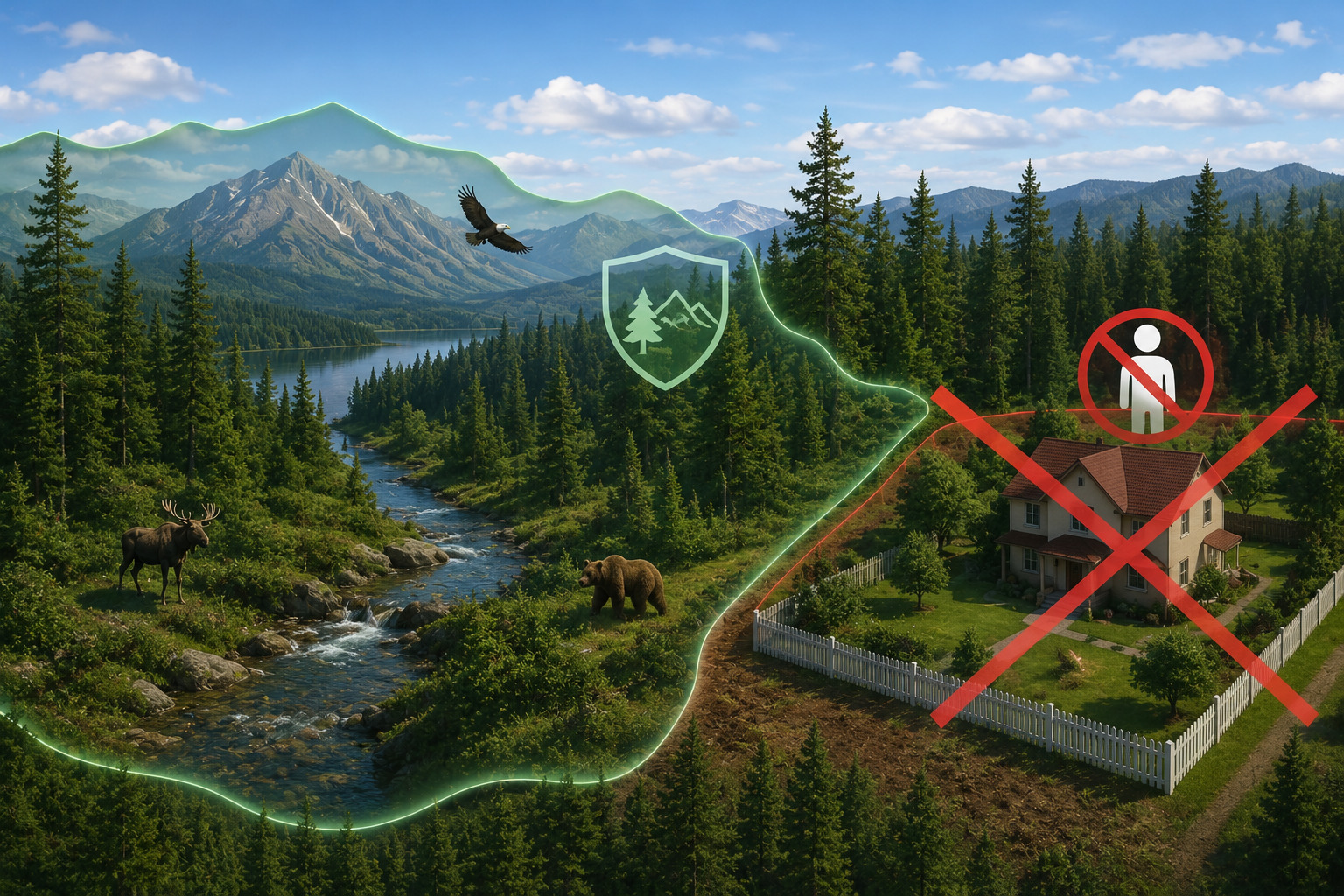
The location of a land parcel within the boundaries of a national park constitutes a basis for recognizing the absence of private ownership rights on it.




Software In general, establishing the fact that the disputed land plot is located within the boundaries of a specially protected natural area of federal significance is sufficient grounds for satisfying the claim filed on behalf of the Russian Federation to recognize the right to such land plot as non-existent.
The prosecutor on behalf of the Russian Federation filed a claim against the citizen requesting recognition of the right to the land plot as non-existent. The citizen filed a counterclaim with the authorized body requesting recognition as a bona fide acquirer of the land plot.
Taking the decision to satisfy the prosecutor's claim and to reject the counterclaim, the court relied on the following.
According to the case, it has been established that the disputed land plot, whose right is registered as belonging to the category of land for populated areas with a permitted use type "for horticulture", is entirely located within the boundaries of the territory of the national park.
The basis for the state registration was an unpersonalized certificate of lifelong inheritable ownership, not registered in the books of registration of title documents, issued in the name of person, who is not included in the lists of members of the gardening society.
The land plot is not fenced, free of buildings, covered with forest vegetation, not developed, and has not actually exited from the possession of the public authority.
Paragraph 1 of paragraph 4 of Article 27 of the Land Code of the Russian Federation, as well as paragraph 2 of Article 12 of the Law on Protected Natural Areas, stipulates that land plots and natural resources, located within the boundaries of state natural reserves and national parks, are removed from circulation, belong to federal ownership, and cannot be transferred into private ownership, with the exception of land plots located within the boundaries of settlements included in the composition of national parks.
On the basis of the provisions of paragraph 3 Article 129 of the Civil Code of the Russian Federation, sub-paragraph 1 of paragraph 4 Article 27 of the Land Code of the Russian Federation, paragraph 2 of Article 12 of the Law on Protected Natural Areas, taking into account the legal position of the Constitutional Court of the Russian Federation, expressed in the decision dated January 28, 2025 No. 3-P, the court came to the conclusion that the disputed land has an owner, who may be exclusively the Russian Federation under the above-mentioned law, and therefore the emergence of private ownership rights on this land is impossible regardless of the method of acquisition.
Rejecting the citizen's argument regarding the good faith acquisition of the land plot, court stated that the actions of the citizen and his predecessors in title by introducing a land plot within the boundaries of the national park into civil circulation had an dishonest character and were aimed at creating an appearance of legality of ownership, concealing from the Russian Federation as the owner the circumstances of its acquisition, and misleading state authorities to make registration entries in the EGRN.
Source: Thematic Review of the Supreme Court of the Russian Federation No. 11/2026. On the consideration by courts of cases related to land plots rights for certain categories of land, withdrawn from circulation and restricted in circulation, and on the use of such plots