General Provisions
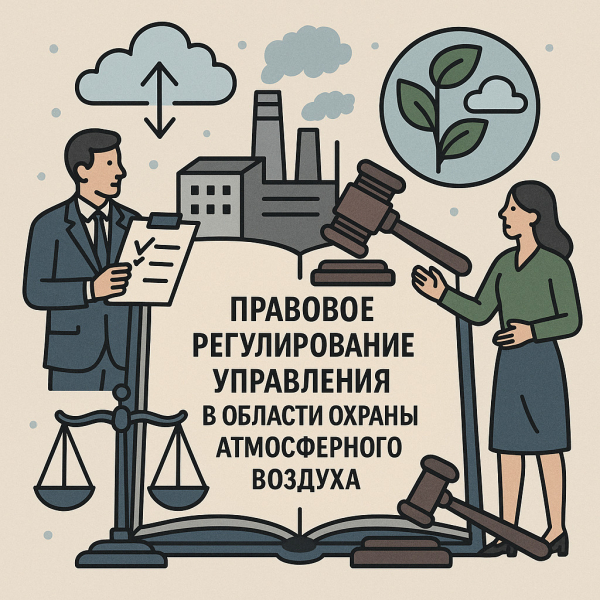
The legal regulation of air quality management in the Russian Federation represents a set of measures aimed at preventing pollution and maintaining air quality at a level safe for health and the environment.
The main elements of such regulation include air quality standards and harmful physical impacts, issuance of emission permits, monitoring of atmospheric conditions, state registration of pollution sources, as well as supervision and control over compliance with legislative requirements.
Air quality standards are established through the setting of hygienic and environmental norms, maximum allowable emissions (MAE) and maximum permissible levels of physical impacts.
Technical emission standards are developed for stationary sources and vehicles, while MAE are set by territorial bodies of federal authorities.
In the event that it is impossible to comply with the permissible emission limits (PДВ) for a specific source, temporarily agreed emissions are allowed, provided that enterprises develop and implement a pollution reduction plan taking into account the danger of substances to health and the environment.
Emissions of harmful substances and harmful physical effects on atmospheric air are permitted only based on permits issued by federal and regional authorities.
Violation of permit conditions may result in restrictions or cessation of emissions. Compliance with these norms is monitored through state and operational inspections, as well as via public oversight.
Air quality monitoring ensures timely provision of information about the air's condition to government bodies, organizations, and the population. The state inventory of emissions and their sources allows for systematic collection of data on atmospheric impact and planning measures to reduce it.
State supervision is carried out by authorized federal and regional government bodies with the aim of identifying and eliminating violations of legislation.
Operational control is assigned to enterprises and organizations that have pollution sources, while public oversight is conducted in accordance with the legislation of the Russian Federation and the subjects of the Russian Federation.
Thus, legal regulation of management in the field of atmospheric air protection ensures a comprehensive approach to protecting the atmosphere, combining preventive measures, monitoring compliance with standards, a permit system, and active participation of society, which allows maintaining ecological safety and public health.
Among the main functions of management in the field of atmospheric air protection, the following can be highlighted: norm setting for the quality of atmospheric air and harmful physical impacts on atmospheric air; granting permits for the emission of harmful (polluting) substances into the atmosphere and granting permits for harmful physical impact on atmospheric air; monitoring of atmospheric air; state accounting of harmful impacts on atmospheric air and their sources; supervision and control in the field of atmospheric air protection.
Norm setting for the quality of atmospheric air and harmful physical impacts on atmospheric air
In order to determine the criteria for safety and (or) harmlessness of the impact of chemical, physical and biological factors on humans, plants and animals, specially protected natural territories and objects, as well as in order to assess the condition of atmospheric air, hygienic and ecological standards of atmospheric air quality and maximum permissible levels of physical impacts on it are established. Hygienic and ecological standards of atmospheric air quality, maximum permissible levels of physical impacts on atmospheric air are established and revised in accordance with the procedure determined by the Government of the Russian Federation (Article 11 of the Federal Law "On Atmospheric Air Protection").
In order to regulate the emission of harmful (polluting) substances into the atmospheric air, the following emission standards are established: technical emission standards; maximum permissible emissions. Technical emission standards are set by the federal executive authority in the field of environmental protection or another federal executive authority authorized by the Government of the Russian Federation, upon coordination with the federal executive authority in the field of environmental protection, for specific types of stationary sources emitting harmful (polluting) substances into the atmospheric air, as well as for transport or other mobile equipment and installations of all kinds that serve as sources of atmospheric air pollution. Maximum permissible emissions are established by territorial bodies of the federal executive authority in the field of environmental protection for a specific stationary source emitting harmful (polluting) substances into the atmospheric air and their aggregate (the organization as a whole).
In the event that legal entities and individual entrepreneurs with emission sources of harmful (polluting) substances into the atmospheric air are unable to comply with the maximum allowable emissions, territorial bodies of the federal executive authority in the field of environmental protection may establish temporarily coordinated emissions for such sources upon agreement with territorial bodies of other federal executive authorities. Temporarily coordinated emissions are established for the period of phased achievement of maximum allowable emissions under conditions of compliance with technical emission standards and availability of a plan to reduce emissions of harmful (polluting) substances into the atmospheric air. The timelines for the phased achievement of maximum allowable emissions are determined by the state authorities of the subjects of the Russian Federation upon submission by the relevant territorial bodies of the authorized federal executive authority in the field of atmospheric air protection. The plan for reducing emissions of harmful (polluting) substances into the atmospheric air is developed and implemented by legal entities and individual entrepreneurs for whom temporary agreed-upon emissions are established, taking into account the degree of danger of these substances to human health and the environment.
In order to state regulation of harmful physical impacts on atmospheric air, maximum permissible norms of harmful physical impacts on atmospheric air are established. Norms of emissions of harmful (polluting) substances into the atmosphere and maximum permissible norms of harmful physical impacts on atmospheric air, temporarily coordinated emissions, methods for their determination and types of sources for which they are established, are developed and approved in accordance with the procedure determined by the Government of the Russian Federation.
Norms of emissions of harmful (polluting) substances into the atmosphere and maximum permissible norms of harmful physical impacts on atmospheric air, as well as methods for their determination are revised and improved as science and technology develop, taking into account international standards (Article 12 of the Federal Law "On Atmospheric Air Protection").
Permit for emission of harmful (polluting) substances into the atmosphere and permit for harmful physical impact on atmospheric air
Emission of harmful (polluting) substances into the atmospheric air by a stationary source is allowed on the basis of a permit issued by the territorial body of the federal executive authority in the field of environmental protection, or by the executive authorities of the subjects of the Russian Federation responsible for state management in the field of environmental protection, in accordance with the procedures established by the Government of the Russian Federation. The permit for emission of harmful (polluting) substances into the atmospheric air sets maximum allowable emissions and other conditions that ensure the protection of atmospheric air.
The procedure for issuing permits for the emission of harmful (polluting) substances into the atmospheric air during the operation of transport and other mobile equipment is established by the federal executive authority in the field of environmental protection.
Harmful physical effects on atmospheric air are permitted based on permits issued in accordance with the procedures established by the Government of the Russian Federation. A state fee is paid for the issuance of permits for emissions of harmful (polluting) substances into the atmosphere and harmful physical effects on atmospheric air in amounts and in the order, which are established by the legislation of the Russian Federation on taxes and fees.
In the absence of permits for emissions of harmful (polluting) substances into atmospheric air and harmful physical effects on atmospheric air, as well as in case of violation of conditions provided for by these permits, emissions of harmful (polluting) substances into atmospheric air and harmful physical effects on it may be restricted, suspended or terminated in accordance with the legislation of the Russian Federation (Article 14 of the Federal Law «On Atmospheric Air Protection»).
Monitoring of atmospheric air
In order to monitor air pollution, conduct a comprehensive assessment and forecast its condition, as well as provide government authorities, local self-government bodies, organizations, and the public with current and emergency information on air pollution, the Government of the Russian Federation, state authorities of the subjects of the Russian Federation, and local self-government bodies organize state monitoring of atmospheric air and ensure its implementation within their competence on the corresponding territories of the Russian Federation, subjects of the Russian Federation, and municipal formations.
State monitoring of atmospheric air is a component of state environmental monitoring (state monitoring of the environment) and is carried out by federal executive authorities in the field of environmental protection, as well as by other executive authorities within their competence in accordance with the procedures established by the federal executive authority authorized by the Government of the Russian Federation.
Regional offices of the federal executive authority in the field of environmental protection, together with regional offices of the federal executive authority in the field of hydrology and meteorology and related areas, establish and revise the list of objects whose owners must carry out atmospheric air monitoring (Article 23 of the Federal Law "On the Protection of Atmospheric Air").
State accounting of harmful impacts on atmospheric air and their sources
Legal entities and individual entrepreneurs having sources of emission of harmful (polluting) substances into the atmospheric air and sources of harmful physical impacts on the atmospheric air, as well as the quantity and composition of emissions of harmful (polluting) substances into the atmospheric air, types and sizes of harmful physical impacts on it are subject to state registration in accordance with the procedures established by the federal executive authority authorized by the Government of the Russian Federation. The list of organizations conducting statistical observations in the field of environmental protection on corresponding territories is determined by territorial offices of the federal executive authority in the field of environmental protection in coordination with territorial offices of the state statistics (Article 21 of the Federal Law "On the Protection of Atmospheric Air").
Supervision and control in the field of atmospheric air protection
In atmospheric air protection legislation, state supervision in the field of atmospheric air protection, production control in the field of atmospheric air protection, as well as public control in the field of atmospheric air protection are provided for.
State Supervision in the Field of Atmospheric Air Protection
State supervision in the field of atmospheric air protection refers to the activities of authorized federal executive authorities and executive authorities of the subjects of the Russian Federation aimed at preventing, detecting, and halting violations by state authorities, local self-government bodies, as well as legal entities, their managers and other officials, individual entrepreneurs, their authorized representatives (hereinafter - legal entities, individual entrepreneurs) and citizens of mandatory requirements established in accordance with international agreements of the Russian Federation, this Federal Law, other federal laws and other normative legal acts adopted in accordance therewith, laws and other normative legal acts of the subjects of the Russian Federation in the field of atmospheric air protection (hereinafter - mandatory requirements), through organizing and conducting inspections of these persons, taking measures provided by legislation of the Russian Federation measures to prevent and (or) eliminate the consequences of identified violations, and the activities of the aforementioned authorized state authorities in systematic monitoring of compliance with mandatory requirements, analysis and forecasting of the status of compliance with mandatory requirements when carrying out their activities by state authorities, local self-government bodies, legal entities, individual entrepreneurs, and citizens.
State supervision in the field of atmospheric air protection is carried out by authorized federal executive body and executive bodies of the subjects of the Russian Federation when they carry out respectively federal state ecological supervision and regional state ecological supervision (hereinafter - state supervision bodies) according to their competence in accordance with the legislation of the Russian Federation on environmental protection and the Federal Law "On Protection of the Rights of Legal Entities and Individual Entrepreneurs in the Implementation of State Control (Supervision) and Municipal Control".
State supervision bodies may be called upon by the court to participate in a case or may enter a case at their own initiative to provide an opinion on a claim for compensation of damage caused to the environment and its components as a result of violations of mandatory requirements (Article 24 of the Federal Law "On Protection of Atmospheric Air").
Production control of atmospheric air protection
Production control of atmospheric air protection is carried out by legal entities and individual entrepreneurs who have sources of harmful chemical, biological, and physical impacts on the atmospheric air and who appoint persons responsible for conducting production control of atmospheric air protection and/or organize environmental services.
Legal entities and individual entrepreneurs who have sources of harmful chemical, biological, and physical impacts on the atmospheric air must protect the atmospheric air in accordance with Russian Federation legislation on atmospheric air protection.
Information on persons responsible for conducting production control over the protection of atmospheric air, and on the organization of environmental services at objects of economic and other activities, as well as results of production control over the protection of atmospheric air are submitted to the relevant executive authority performing state environmental supervision (Article 25 of the Federal Law "On Protection of Atmospheric Air").
Public Control Over the Protection of Atmospheric Air
Public control over the protection of atmospheric air is carried out in accordance with the legislation of the Russian Federation and the legislation of the subjects of the Russian Federation in the field of environmental protection, as well as the legislation of the Russian Federation and the legislation of the subjects of the Russian Federation on public organizations (Article 26 of the Federal Law "On Protection of Atmospheric Air").