General Provisions
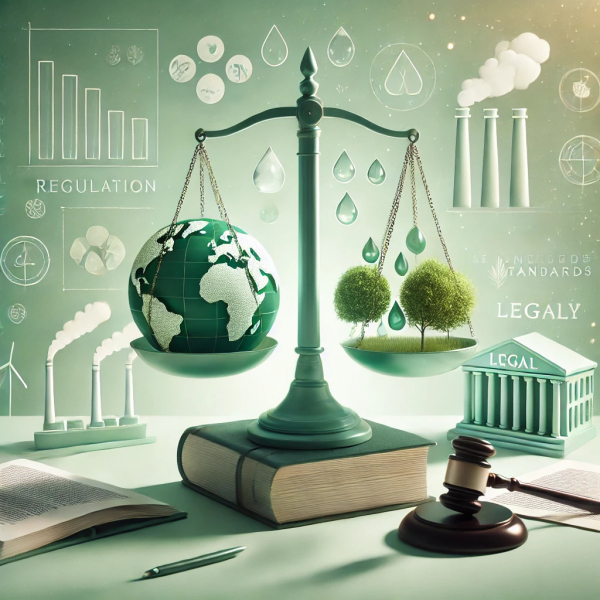
The legal regulation of environmental standards is a key instrument of state policy in the field of environmental protection. Environmental standardization refers to the establishment of norms by authorized government agencies that ensure the sustainable functioning of ecosystems, preservation of biodiversity, and rational use of natural resources. It covers both environmental quality standards and permissible impact standards on nature, non-compliance with which entails the application of legal enforcement measures.
The main objective of environmental regulation is state control over the impact of economic and other activities on the natural environment. This is achieved through the development of environmental quality standards, permissible impact standards, resource extraction standards, and other normative documents. Such a system allows for minimizing environmental risks and ensures protection of public health as well as preservation of natural capital for future generations.
Environmental regulation norms and documents are developed based on modern scientific data, technological achievements, and international standards. Their approval and implementation is carried out in accordance with the decisions of the Government of the Russian Federation, such as Decisions No. 469 and No. 183, regulating permissible emissions, discharges of substances, and physical impacts on various natural environments, including water and atmospheric air.
A differentiated approach to environmental regulation allows for setting standards separately for atmospheric air, water bodies, and soil. However, as experts note, such an approach does not always prevent cross-media pollution, when harmful substances move between different natural environments. In this context, the integration of regulation and a comprehensive assessment of impact on ecological systems as a whole is important.
Article 20 of the Federal Law "On Environmental Protection" regulates the process of developing standards: conducting scientific research, expert review, approval and publication of standards, monitoring compliance, and maintaining a unified database. Such a systematic approach ensures transparency in regulation, forecasting environmental and socio-economic consequences, and forming an effective legal basis for protecting the environment.
According to M.M. Brinchuk, ecological norm-setting refers to the establishment of environmental standards by authorized state agencies in accordance with legislative requirements. According to Article 1 of the Federal Law "On Environmental Protection," environmental standards (environmental protection standards) are established standards of environmental quality and permissible impact on it, compliance with which ensures sustainable functioning of natural ecological systems and preserves biodiversity. In the opinion of M.V. Ponomarev, environmental standards represent criteria for the quality of the environment and limitations on negative impacts from economic and other activities; non-compliance with them leads to the application of legal measures by authorized state agencies.
Environmental regulation is carried out in order to state regulation of the impact of economic and other activities on the environment, ensuring the preservation of a favorable environment and ensuring environmental safety. Environmental regulation involves establishing standards for the quality of the environment, permissible impact standards on the environment when carrying out economic and other activities, as well as other environmental standards, and regulatory documents in the field of environmental protection. In this regard, M.M. Brinchuk, within the system of ecological standards, along with environmental quality standards and maximum allowable harmful impact standards on the environment, also includes standards for permissible extraction of natural resources.
Norms and normative documents in the field of environmental protection are developed, adopted, and put into effect based on modern scientific and technical achievements, taking into account international rules and standards in the area of environmental protection. Environmental regulation is carried out in accordance with the procedures established by the Government of the Russian Federation. Among the government decrees of the Russian Federation regulating public relations regarding ecological norm-setting, the following can be highlighted: the decree of the Government of the Russian Federation dated 23.07.2007 No. 469 "On the procedure for approving permissible discharge norms for substances and microorganisms into water bodies for water users", the decree of the Government of the Russian Federation dated 02.03.2000 No. 183 "On permissible emission norms for harmful (polluting) substances into the atmosphere and harmful physical impacts on it".
According to I.O. Krasnova, all norms under current legislation are established in a differentiated manner with respect to each natural environment — atmospheric air, waters, soils. A differentiated approach, both in meaning and in practice, does not solve the problem of reducing pollution of the surrounding environment as a whole, since it does not contain mechanisms for preventing the transfer of pollutants from one natural environment to another. Even the Federal Law "On Environmental Protection" does not address such a task, although it is intended to ensure an integrated approach to regulating impacts on the environment as a whole.
Article 20 of the Federal Law "On Environmental Protection" establishes requirements for the development of norms in the field of environmental protection. According to this article, the development of norms in the field of environmental protection includes: conducting scientific research to justify norms in the field of environmental protection; conducting expert reviews, approval and publication of norms in the field of environmental protection in accordance with established procedures; establishing grounds for developing or revising norms in the field of environmental protection; carrying out control over the application and compliance with norms in the field of environmental protection; forming and maintaining a unified information database of norms in the field of environmental protection; assessing and forecasting the ecological, social, and economic consequences of applying norms in the field of environmental protection.