General Provisions
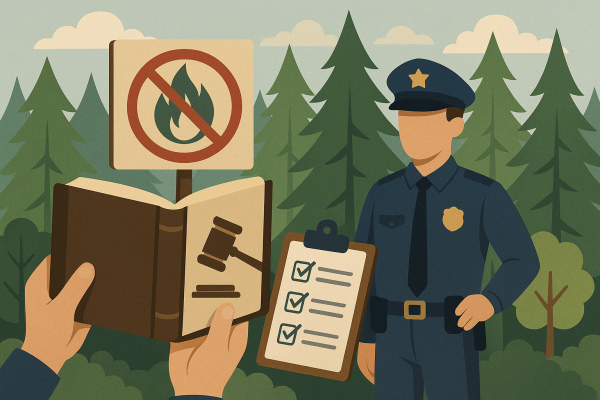
The legal regulation of the use and protection of forests in the Russian Federation is aimed at preserving, rational use, and reproduction of the forest fund, as well as preventing negative impact on forests and the environment. Forests are to be protected from fires, pollution, harmful effects from people, as well as from harmful organisms. State authorities and local self-government bodies carry out control and supervision over compliance with forest protection rules, including the implementation of forestry regulations and forest development projects. Violation of these rules is a basis for the early termination of the right to use forest plots.
It is important to distinguish between the protection and conservation of forests. Protection includes measures aimed at maintaining forests in their current state, improving their quality, and preventing future threats. Conservation is directed towards countering already existing negative factors such as tree diseases, pests, and other hazardous influences.
Forests in Russia are classified according to their purpose: protective, operational, and reserve forests. Protective forests preserve eco-forming, water protection, sanitary-hygienic, and health-improving functions provided that their use is compatible. Operational forests are intended for the rational harvesting of timber and other forest resources while maintaining the beneficial functions of forests. Reserve forests are temporarily not used for logging and serve for conservation, protection, and regeneration of the forest fund.
Forest protection includes fire safety measures: fire prevention, monitoring of fire risk, development of firefighting plans, extinguishing fires, and preventing their recurrence. Individuals using forests must immediately inform the relevant services about fires and take measures to prevent their spread.
Forest protection includes the detection and containment of harmful organisms, including quarantine objects, as well as conducting aerial operations such as patrolling, delivering firefighting personnel and equipment, and state forest pathological monitoring.
Special attention is given to protecting forests from radioactive contamination and preserving rare and endangered species of trees, shrubs, and other forest plants. In such cases, restrictions or prohibitions are imposed on activities that could cause harm to these objects and their habitats.
Thus, the legal regulation of the use and protection of forests ensures a comprehensive approach to protecting the forest fund, rational use of resources, and maintaining ecological sustainability, creating a legal basis for preserving and reproducing forests in the interests of society and nature.
Forests are to be protected from fires, pollution (including radioactive substances) and other negative impacts, as well as from harmful organisms. Protection and preservation of forests are carried out by state authorities and local self-government bodies within the scope of their powers defined in accordance with articles 81 - 84 of the Forest Code of the Russian Federation, unless otherwise provided for by this Code or other federal laws.
The failure of citizens and legal entities engaged in the use of forests to comply with the forest management regulations and the project for the development of forests in terms of the protection and preservation of forests is a basis for the early termination of lease agreements for forest land, sale agreements for forest stands, as well as for the compulsory termination of the right of perpetual (indefinite) use of forest land or the right of gratuitous temporary use of forest land (Article 51 of the Forest Code of the Russian Federation). In this context, a forest land is a land plot whose boundaries are determined in accordance with Articles 67, 69 and 92 of the Forest Code of the Russian Federation (Article 7 of the Forest Code of the Russian Federation).
It is important to distinguish between such legal categories as "conservation" and "protection" in relation to forests. As noted by Yu.I. Shuplecova, conservation represents a system of measures aimed at maintaining forests and other vegetation in their current state and thus preventing the deterioration of their condition; improving their quality and preventing future negative impacts. Protection refers to countering existing negative factors. For example, the pests and diseases mentioned in the Russian Federation Forestry Code.
At the same time, along with forests, objects of environmental protection from the negative impact of economic and other activities also include other vegetation (Article 4 of the Federal Law "On Environmental Protection"). According to Yu.I. Shupleiko, legal protection of forests and non-forest vegetation should be understood as a set of legal norms regulating social relations arising in the process of preserving and restoring forests and non-forest vegetation.
Forests located on forest fund lands, according to their purpose, are divided into protective, exploitative, and reserve forests (Part 1 of Article 10 of the Forest Code of the Russian Federation).
Protective forests shall be developed in order to preserve the environment-forming, water protection, protective, sanitary-hygienic, health-improving and other beneficial functions of forests while simultaneously using the forests provided that such use is compatible with the intended purpose of protective forests and the beneficial functions they perform (paragraph 4 of Article 12 of the Forest Code of the Russian Federation). Protective forests include, for example, urban forests (item "g" of part 2 of Article 102 of the Forest Code), which, despite being located on land of populated areas (paragraph 2 of part 3 of Article 23 of the Forest Code), must be protected in accordance with the provisions of the Forest Code relating to protective forests.
Operational forests shall be developed for sustainable and maximally efficient production of high-quality timber and other forest resources, as well as products derived from them, while ensuring the preservation of the beneficial functions of forests (paragraph 3 of Article 12 of the Forest Code of the Russian Federation).
Reserved forests are those in which timber harvesting is not planned for a period of twenty years (Part 1 of Article 109 of the Forest Code of the Russian Federation). Aerial operations for forest protection and conservation are carried out in reserved forests. On forest plots that share a boundary with populated areas and infrastructure objects, fire safety measures are implemented, as well as firefighting activities (Part 2 of Article 109 of the Forest Code of the Russian Federation). Fire safety measures include: prevention of forest fires; monitoring of fire danger in forests and forest fires; development and approval of plans for extinguishing forest fires; other fire safety measures in forests (Part 1 of Article 53 of the Forest Code of the Russian Federation).
The use of reserve forests is allowed without conducting logging operations. Logging operations in reserve forests are permitted after their classification as operational or protective forests, except for cases involving logging in reserve forests during geological exploration of mineral resources and the harvesting of timber by citizens for personal needs (paragraph 3 of Article 109 of the Forest Code of the Russian Federation).
Forest Fire Protection
Forest fire protection includes implementing fire safety measures in forests and extinguishing forest fires (paragraph 1 of Article 52 of the Forest Code of the Russian Federation). Fire safety measures in forests include: 1) prevention of forest fires; 2) monitoring of fire danger in forests and forest fires; 3) development and approval of plans for extinguishing forest fires; 4) other fire safety measures in forests.
Firesafety measures in forests are carried out in accordance with the forest plan of a subject of the Russian Federation, the forestry management regulations of the forest district and forest park, and the project for the development of forests. Rules of firesafety in forests and requirements for firesafety measures in forests depending on the purpose of land use and the purpose of forests are established by the Government of the Russian Federation. Classification of natural fire hazard in forests and classification of fire hazard in forests depending on weather conditions are established by the authorized federal executive authority (Article 53 of the Forest Code of the Russian Federation).
Fighting a forest fire includes: 1) surveying the forest fire using ground, aerial or space-based means in order to determine the type and intensity of the forest fire, its boundaries, direction of movement, possible spread limits and localization, sources of firefighting water supply, access routes to them and to the location of the forest fire, as well as other features determining the tactics for fighting the forest fire; 2) transporting people and firefighting equipment to the site of the forest fire and back; 3) localizing the forest fire; 4) extinguishing the forest fire; 5) monitoring the localized forest fire and its complete extinguishment; 6) preventing the rekindling of the forest fire.
Persons using forests, in the event of discovering a forest fire on the relevant forest area, are immediately obliged to report this to the specialized dispatch service and take all possible measures to prevent the spread of the forest fire. Rules for extinguishing forest fires are established by the authorized federal executive body (Article 53.4 of the Forest Code of the Russian Federation).
Forest Protection
Forest protection is aimed at detecting harmful organisms in forests (plants, animals, pathogenic organisms capable of causing damage to forests or forest resources under certain conditions) and preventing their spread, and in the event of outbreaks of harmful organisms classified as quarantine objects, at their localization and elimination. Protection of forests from harmful organisms classified as quarantine objects is carried out in accordance with the Federal Law "On Plant Quarantine" (Article 54 of the Forest Code of the Russian Federation).
Aerial Work for Forest Protection and Conservation
Aircraft operations for the protection and conservation of forests include: 1) aerial patrolling; 2) extinguishing forest fires; 3) delivery by aircraft of forest fire units, firefighting equipment and gear, fire-fighting supplies and inventory to the site of a forest fire and back; 4) conducting state forest pathology monitoring using aviation means and performing other works for the protection of forests from harmful organisms.
The procedure for organizing and carrying out aircraft operations for the protection and conservation of forests is established by the authorized federal executive authority (Article 57 of the Forest Code of the Russian Federation).
State forest pathology monitoring
In order to protect and conserve forests, information on the forest pathology condition of forests is collected, analyzed and used, including information on foci of harmful organisms classified as quarantine objects (state forest pathology monitoring).
State forest pathology monitoring is part of state environmental monitoring (state monitoring of the environment). The procedure for organizing and conducting state forest pathology monitoring is established by the authorized federal executive body (Article 56 of the Forest Code of the Russian Federation).
Protection of forests from radioactive contamination
In order to protect forests from radioactive contamination, radiation surveys of forests are carried out and zones of their radioactive contamination are established. The specifics of protecting forests, developing and implementing preventive and rehabilitative measures in zones of forest radioactive contamination are established by the authorized federal executive body (Article 58 of the Forest Code of the Russian Federation).
Protection of rare and endangered species of trees, shrubs, vines, and other forest plants
In order to preserve rare and endangered species of trees, shrubs, vines, other forest plants listed in the Red Book of the Russian Federation or the red books of the subjects of the Russian Federation, activities that may lead to a decrease in the number of such plants and (or) deterioration of their habitat may be prohibited, or restrictions on carrying out these activities may be imposed (Article 59 of the Forest Code of the Russian Federation).